Langsung ke konten
SurgBookBelajar. Berdiskusi. Berbagi.
Foto artikel Peripheral Artery Disease (PAD) Perbesar foto
Peripheral Artery Disease (PAD)

ARTIKEL ILMU BEDAH

Peripheral Artery Disease (PAD)

12 subartikelDiskusi bersama

DIBANGUN BERSAMA

Tim & aktivitas artikel

Penanggung jawab

Administrator

Kontributor

Belum ada kontributor tambahan.

— / 50 penilai
0Pembaca unik
0Kunjungan unik harian

Pembaca unik dihitung lintas hari. Kunjungan adalah akumulasi hitungan sekali per akun per hari, mulai pencatatan fitur ini.

Login untuk memberi rating artikel

Gambaran umum

Belum ada catatan yang disetujui pada subartikel ini.

Anatomi

Belum ada catatan yang disetujui pada subartikel ini.

Etiologi & Faktor Resiko

Belum ada catatan yang disetujui pada subartikel ini.

Patofisiologi

Belum ada catatan yang disetujui pada subartikel ini.

Klasifikasi

Belum ada catatan yang disetujui pada subartikel ini.

Anamnesis

Belum ada catatan yang disetujui pada subartikel ini.

Pemeriksaan Fisik

Belum ada catatan yang disetujui pada subartikel ini.

Pemeriksaan Fisik

Belum ada catatan yang disetujui pada subartikel ini.

Penunjang

Penunjang

Penunjang

  1. Duplex ultrasound (DUS) : Duplex ultrasound (DUS) is a first step in the vascular work-up for PAD screening and diagnosis, allowing a dynamic, non-invasive, radiation- and contrast-free examination. It localizes vascular lesions and quantifies their extent and severity through velocity criteria. In combination with ABI or TBI, DUS permits determining the haemodynamic relevance of arterial lesions and estimation of ABI. DUS has a sensitivity of 88% and specificity of 95% for >50% stenosis detection.
  2. CT-Angiography : Another non-invasive technique is CTA, which utilizes intravenous contrast medium injection to opacify the arterial lumen and detect any change in the caliber. Assessment of the stenosis, occlusion and collateral circulation can be done using multislice thin axial cuts followed by multiplanar reconstruction. Maximum intensity projections (MIP) and volume rendering techniques (VRT) can also be used in the assessment of the vessels. 
  3. MR angiography : MR angiography is a noninvasive technique that can be acquired without contrast administration, however, sometimes it can overestimate stenosis severity.
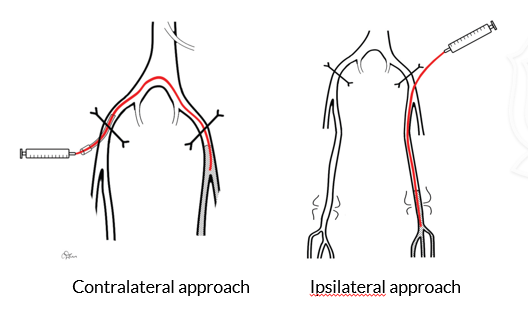
  4. Digital subtraction angiography : Digital subtraction angiography is an invasive technique done percutaneously through femoral catheter insertion. It is the gold standard for assessment of stenosis, occlusion and collateral flow and can be diagnostic and therapeutic.
     

Diagnosis

Belum ada catatan yang disetujui pada subartikel ini.

Tatalaksana

Tatalaksana

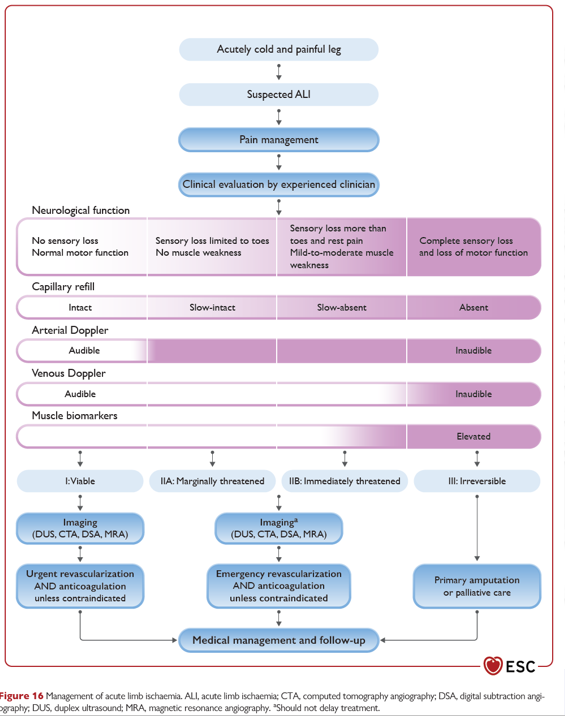
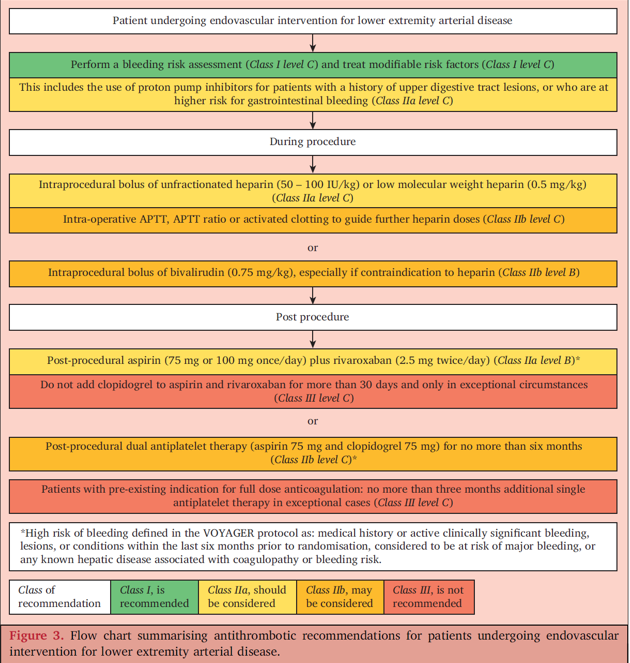
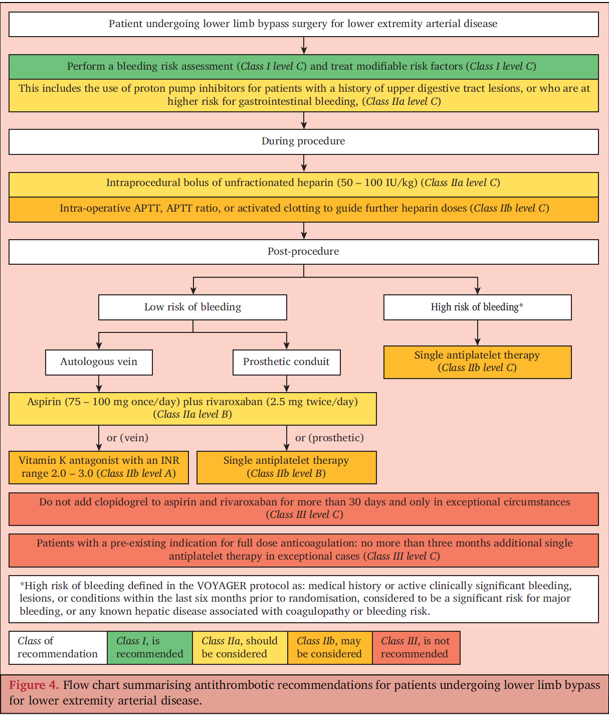
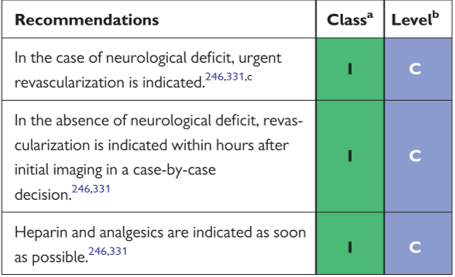
MANAGEMENT OF ACUTE LIMB ISCHEMIA: RECOMMENDATIONS

1. For marginally or immediately threatened limbs(Category IIa and IIb ALI), revascularization should be performed emergently (within 6 hours). 
2. For viable limbs (Category I ALI), revascularization should be performed an on urgent basis (within 6 to 24 hours). 

Medication Therapy

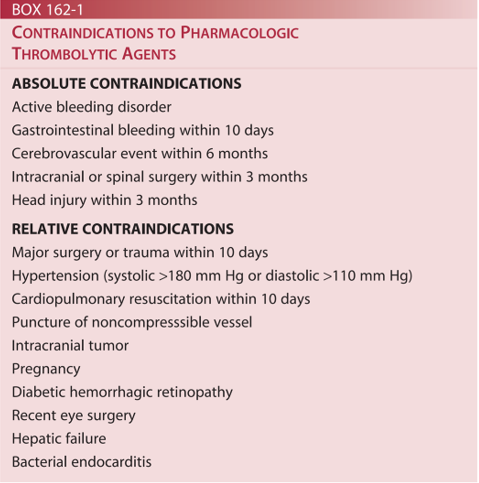
  • Upon clinical diagnosis, initiate analgesia, anticoagulation, and i.v. fluids. Addressing acidosis and hyperkalaemia may be necessary. Administer i.v. unfractionated heparin (bolus 5000 IU or 70–100 IU per kg body weight, followed by continuous infusion with dose adjustment based on patient response, monitored by activated clotting time or activated partial thromboplastin time)


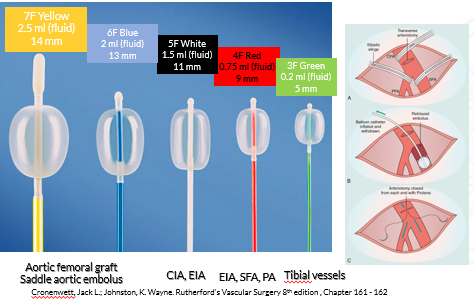
Surgical Embolectomy : 

Pros

  • Rapid revascularization
  • Can be done via low tech instrument
  • Transfemoral approach can be done via local anesthesia

Cons

  • Vessel injury
  • Reperfusion syndrome
  • Low success rate if ischemia >24 hour
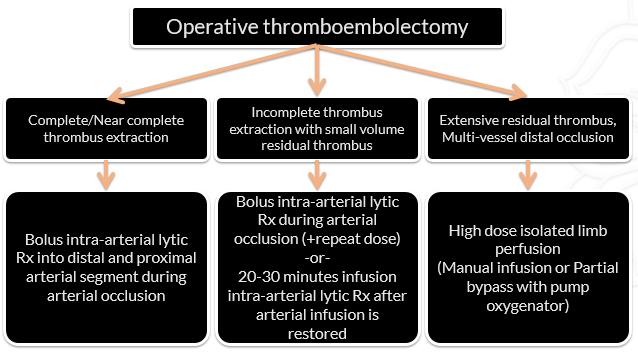
  • Adjunct by “Intraoperative thrombolysis”

Cronenwett, Jack L.; Johnston, K. Wayne. Rutherford's Vascular Surgery 8th edition , Chapter 161 - 162 


Intraoperative Thrombolysis

Pros

  • Adjunct to surgical thromboembolectomy  Clear residual thrombus in the small  arteries and arteriole
  • Minimal risk of bleeding

Cons

  • May be inadequate in some patients with extensive distal and small vessel thrombosis


Catheter Directed Thrombolysis

Pros

  • Direct delivery of the drug into existing thrombus
    • ↓ Thrombolytic drug dosages
    • ↓ Systemic bleeding complications
  • Lyses clot in both large and small vessels
  • Lower reperfusion syndrome than embolectomy
  • Done via percutaneous approach with local anesthesia

Cons

  • Usually takes 12 - 24 hours to be effective
  • Still increased bleeding risk
  • ICH: 0-2.5%
  • Major bleeding: 1-20%


Percutaneous mechanical thrombectomy (PMT) : as adjunctive therapy to thrombolysis (pharmacologic therapy)

Pros

  • Disrupts the thrombus : Allows better penetration of the clot by a thrombolytic agent
    • ↓ Thrombolytic dosing
    • ↓ Therapy time : Increasingly being used in “class IIb”
  • Done via percutaneous approach with local anesthesia
  • Less vessel injury

Cons

  • Can be used only large vessel
  • Expensive device

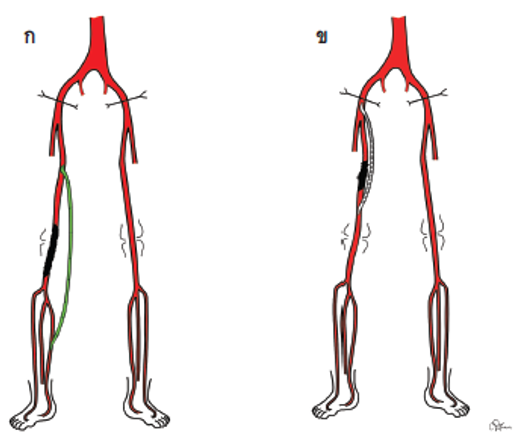
Arterial Bypass Surgery

Pros

  • Use in patient that…
    • Failed other procedures  Our last resort!!!
    • Severe tissue injury
    • Peripheral vascular disease
  • Main treatment for thrombosed popliteal artery aneurysm 

Cons

  • High surgical risk


 Amputation* : 

  • Performed as the first(index) procedure in 
  • A nonsalvageable (class III) limb 
  • Low potential of limb salvage  
  • Risk of reperfusion syndrome and associated MOF *may be deferred if pain under control and no infection and meets with patients goals 

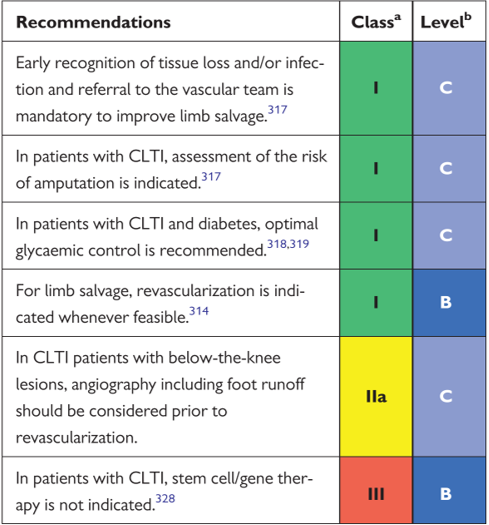
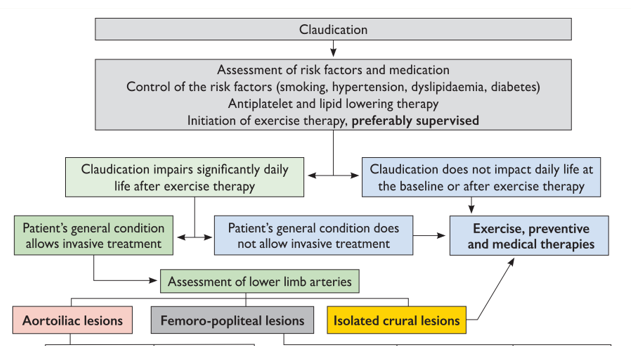
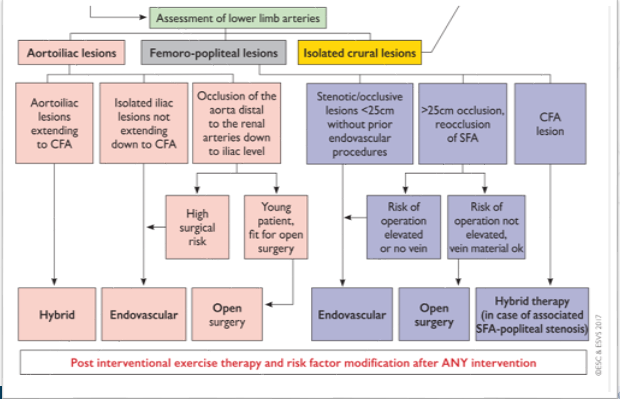
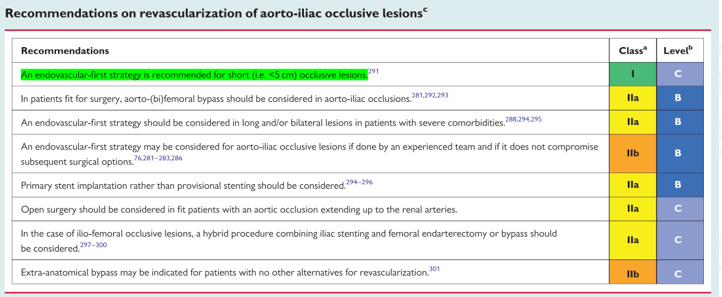
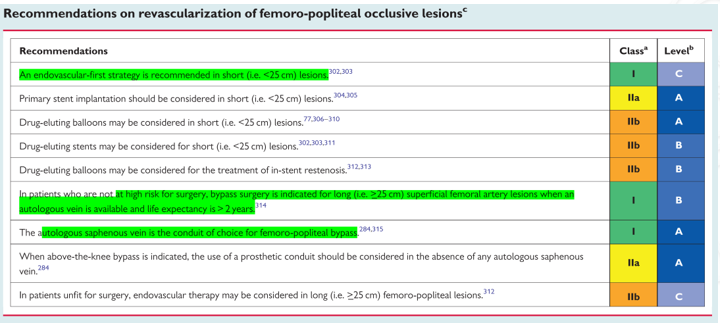
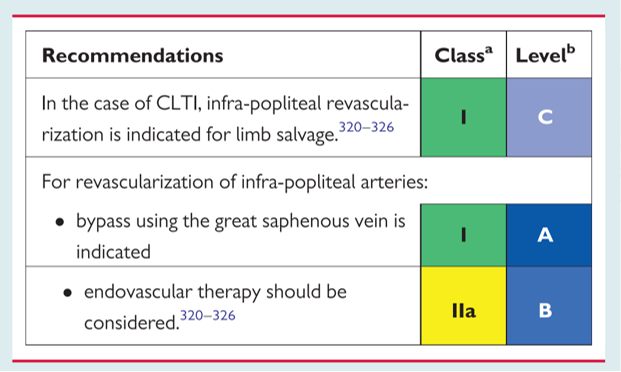
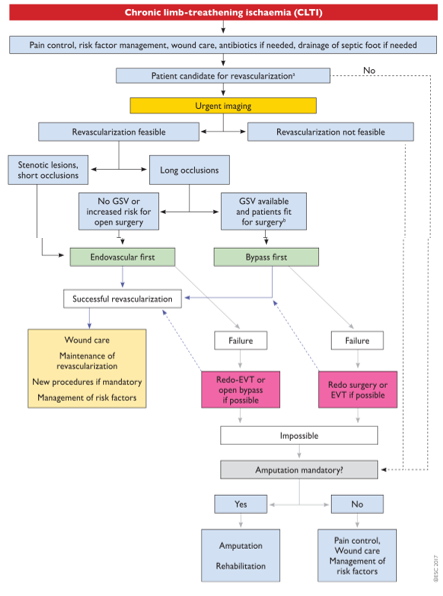
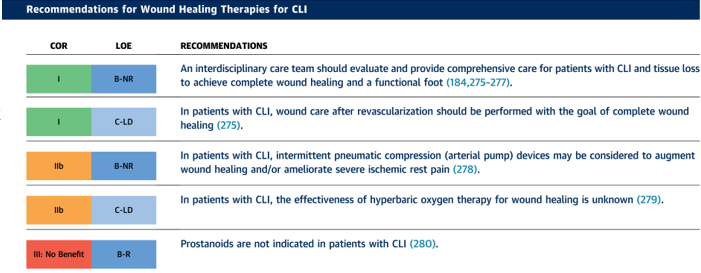
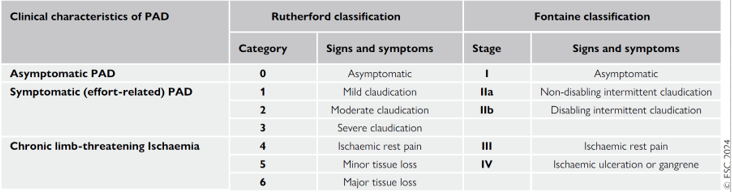
MANAGEMENT OF Critical LIMB ISCHEMIA: RECOMMENDATIONS Revascularization options: general aspects


Prognosis

Belum ada catatan yang disetujui pada subartikel ini.

SUMBER PEMBELAJARAN

Daftar referensi

Belum ada referensi yang dikonfirmasi pada catatan artikel ini.

BELAJAR BERSAMA

Diskusi publik

Tanya jawab umum seputar artikel. Tugas dan koreksi kontributor berada di editor.

Baca diskusi secara publik. Login untuk berkomentar

Belum ada diskusi. Mulai dengan pertanyaanmu.

Peripheral Artery Disease (PAD)

Foto lengkap artikel Peripheral Artery Disease (PAD)